
Of the 59 IPOs for which the data is available, 36 IPOs received mega responses of more than 10x (of which, six IPOs more than 100x), while eight IPOs were oversubscribed more than 3x.

The primary issue market has hit an all-time high with 63 corporates raising Rs 1,18,704 crore through main-board initial public offerings (IPOs) so far in 2021, which is nearly 4.5 times more than the Rs 26,613 crore raised through 15 issues in 2020 and almost double of the previous best of Rs 68,827 crore in 2017, according to a report. Pranav Haldea, managing director of Prime Database Group, said the IPO frenzy was driven by new-age loss-making technology start-ups along with strong retail participation, and the resultant massive listing gains were the key highlights of the year. Another highlight was only 51 per cent or Rs 103,621 crore of the total Rs 202,009 crore was fresh capital raising and the remaining Rs 98,388 crore were offers for sale.
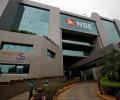
FPIs' ownership in NSE-listed companies reached a five-year high of 22.74 per cent in December 2020 on the back of huge net inflow of Rs 1.42 lakh crore by such investors in the third quarter.

Market experts said disruptions caused by the pandemic - to businesses as well as the filing process - and the sharp decline in valuations were the reasons behind fewer new companies wanting to tap the capital markets.
According to PRIME Database, there are nine companies with active buyback programmes of Rs 8,605 crore. Among these, Infosys's share repurchase programme is the biggest at Rs 8,260 crore.

The mega real estate loan scam could delay the initial public offers of over half a dozen real estate developers because of poor investor sentiment, said bankers and analysts tracking the sector.

The bench allowed the rejoinder affidavit to be filed by petitioners in two weeks thereafter and posted the matter for final hearing in January, 2025.

The euro zone crisis could trip the fundraising plans of Indian companies at home and abroad and dent confidence, while euro's weakness will hurt exporters selling in the currency.

According to a report by Prime Database, ". . . fiscal 2011-12 witnessed a mobilisation through corporate bonds on private placement basis of Rs 2,51,437 crore (Rs 2,514.37 billion) , significantly higher than the preceding year's mobilisation of Rs 1,92,225 crore (Rs 1,922.25 billion)."

Indian companies have raised over Rs 3.13 lakh crore up to September, excluding foreign currency convertible bonds (FCCBs) and external commercial borrowings in September. This is close to the cumulative Rs 3.14 lakh crore raised in 2009.Inc's highest fund mobilisation was in 2007, when it mopped up over Rs 3.20 lakh crore.
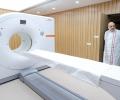
Do we have enough trained oncologists and medical professionals in India to man these over 4,500 beds in the public sector?
LIC's $2.7-billion initial public offering (IPO) shall be the fifth-biggest globally in CY22. South Korean EV battery maker LG Energy Solution holds the record for the year's largest IPO at $10.8 billion, while Chinese mobile communications provider China Mobile IPO, which raised $8.6 billion, comes second. Dubai Electricity and Water Authority's (DEWA's) $6.1-billion IPO in March is currently the third biggest public offering for the year, followed by China National Offshore Oil Corporation's (CNOOC's) IPO; the firm had raised $5.1 billion by issuing shares in Mainland China after delisting from the American bourses.

The Tata Tech IPO will be the first from the Tata group since TCS listed its shares in 2004.

At least 12 companies have announced plans to raise capital through public sale of bonds.
Companies, which missed out on listing earlier, are giving it another shot but with significantly-reduced issue sizes. In the recent past, companies such as TVS Supply Chain Solutions, Suraj Estate Developers, and ESAF Small Finance Bank have re-filed their draft red herring prospectuses (DRHPs) with the Securities and Exchange Board of India (Sebi). This came after they slashed their issue sizes by 20-60 per cent.

Real estate companies appear to be the worst hit by the ongoing global uncertainties, coupled with the new norms for primary market issuances.
The Central Information Commission's decision to bring stock exchanges within the purview of Right to Information Act will keep the bourses on high alert and ensure that necessary information is made available to public in cases of manipulation.
More than seven of 10 independent directors sitting on the boards of listed companies to improve corporate governance are "home" members, while only few women make it to such positions, says a study.

In terms of the number of rights issues, the fiscal saw only 16 companies adopt the route to raise funds, 33 per cent lower than the previous fiscal, which saw 24 issues.
The Securities and Exchange Board of India's (Sebi's) proposal to re-introduce "hard underwriting" is seen as step to boost India's moribund initial public offering (IPO) markets. The regulator has proposed that in case an IPO fails to garner full subscription, the investment banker or a third-party can buy the unsubscribed shares. This practice was common during fixed-price issues prior to 1999. However, under the new book building regime, underwriting is allowed only to the extent of shortfall due to technical rejection of bids - this is referred to as "soft underwriting" and is rarely invoked.

In the past two months alone, four companies have garnered a cumulative Rs 22,400 crore via this route.

The success of recent IPOs and the stability in the secondary market are propelling many firms and investment bankers to remove their IPO plans.

The 21 entities, which hit the market with their initial public offers, have raised as much as Rs 19,000 crore (Rs 190 billion), the highest ever in any year, according to primary market tracking firm Prime Database.
In debt private placements, firms issue debt securities or bonds to institutional investors to raise capital.
ICICI Securities (I-Sec) has topped the Prime Database league table for money raised through initial and follow-on public offerings (IPOs/FPOs). Besides being No.1 in IPO transactions this year, the category-1 merchant banker is working on a lot of private equity transactions.
In ITC, LIC has invested Rs 38,358.66 crore, according to Capitaline data.
The success of the DLF initial public offer might give more confidence to realty companies.
In spite of burgeoning initial public offerings, fund mobilisation by Indian companies through debt and equity issues in the year grew only 14 per cent, against close to 40 per cent in each of the earlier three financial years.
"The impact of Sebi action will be positive for retail investors as they will get greater allocation in IPOs," Prithvi Haldea of Prime Database told PTI.

Fresh capital raised by companies by way of initial public offerings (IPOs) is set to hit a 14-year high, thanks mainly to Zomato's maiden offering. India Inc has raised about Rs 19,300 crore in fresh capital by maiden offerings, including the Rs 9,000 crore the food delivery company will raise this week, so far in 2021. The best year in terms of fresh fund-raise was 2007, when companies had raised Rs 32,102 crore. With Paytm planning to issue fresh shares worth Rs 12,000 crore, the domestic market looks set to surpass that tally this year.
India Inc may be on a mad rush to pick up independent directors, but there is a long queue of professionals waiting to take up the challenging job. \nAs many as 2,738 professionals, including high profile IIM, IISc and IIT graduates, have enrolled th

Companies that have a net worth of at least Rs 500 crore, a turnover of Rs 1,000 crore or a net profit of Rs 5 crore are required to spend 2 per cent of their net profits on corporate social responsibility programmes.
The Securities and Exchange Board of India (Sebi) has cleared the draft red herring prospectus (DRHP) of the state-owned Life Insurance Corporation of India (LIC). According to investment banking sources, the so-called final observations were issued by the market regulator on Tuesday evening. Following the market regulator's nod to the IPO papers, the insurer can launch its share sale. However, LIC may not launch its IPO immediately given the current volatile market conditions.
Investors should not feel jittery over the stock market fall as it would only bring more sanity into issue pricing, according to an expert on the primary market.
Keeping pace with the strong economic growth, Indian companies are set to raise a record Rs 45,000 crore (Rs 450 billion) through public offer of shares in 2006 as they expand both domestically and globally.
India Inc raised Rs 47,720 crore (Rs 477.20 billion) through various debt instruments during the first six months of the fiscal 2004-05 even as central public sector undertakings lagged behind the private sector and state-level undertakings in the re
